
Description
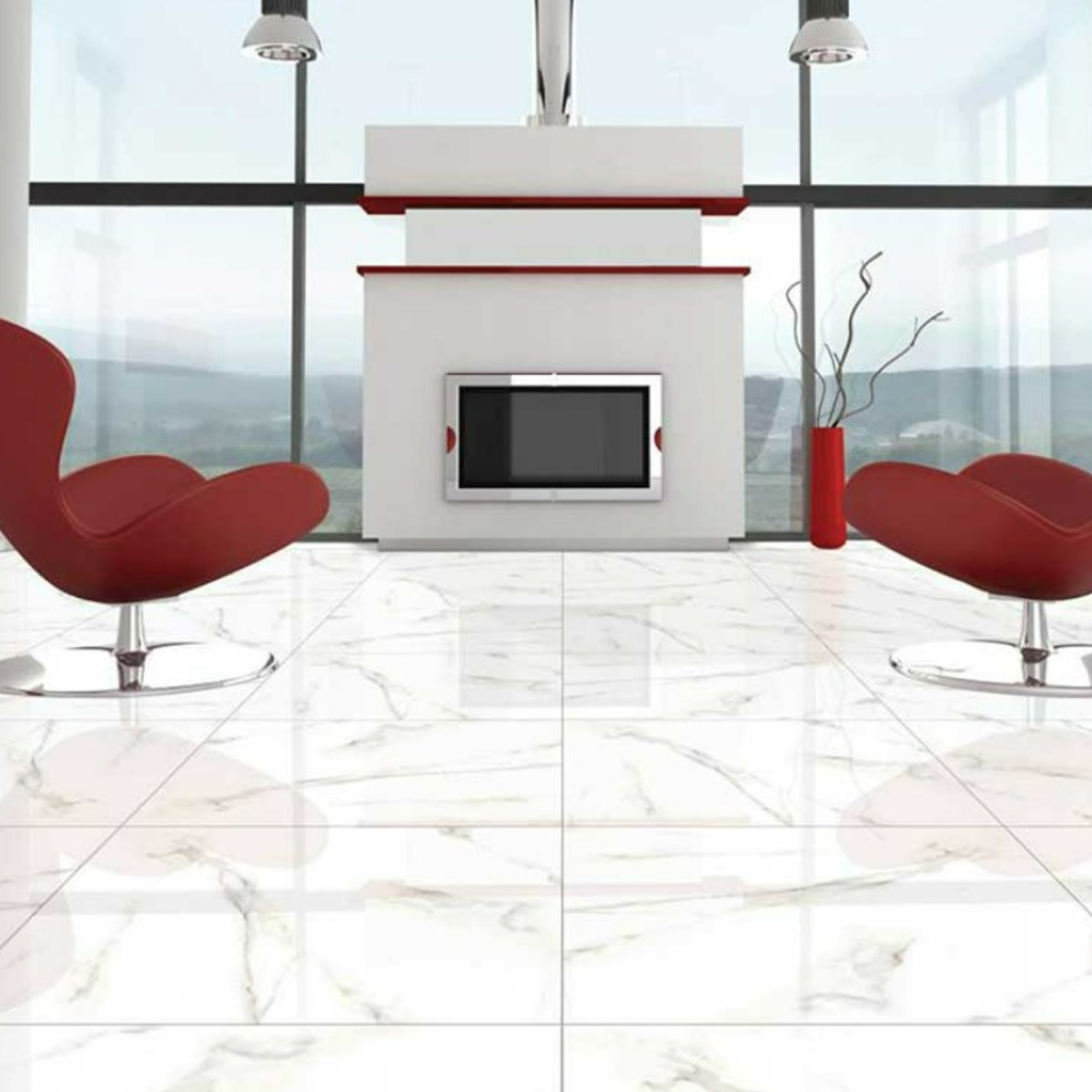
Vitrified tiles are a popular choice for flooring and wall cladding due to their durability, low porosity, and aesthetic appeal. They are made by fusing ceramic materials at high temperatures, resulting in a glass-like, non-porous surface. Here’s a breakdown of the main types of vitrified tiles:
- Full Body Vitrified Tiles (Soluble Salt Vitrified Tiles)
They often have a salt-and-pepper or speckled appearance, resembling natural stone.- Durability
Extremely durable and resistant to scratches, stains, and heavy foot traffic. Even if chipped, the underlying color remains the same, making damage less noticeable.
- Durability
- Glazed Vitrified Tiles (GVT)
These tiles have a glaze applied to the surface, which contains the design and color. This glaze is then fired onto the tile body. - Double Charge Vitrified Tiles
- Characteristics
These tiles are made by adding two different colored clays into the die during the manufacturing process. The pigments are pressed onto the tile body to a depth of about 3-4 mm, creating a pattern that penetrates this surface layer.
- Characteristics
- Porcelain Vitrified Tiles
- Characteristics
This is a sub-category of vitrified tiles that are made with a higher proportion of kaolin clay and fired at even higher temperatures. This results in a denser, less porous, and more durable tile.
- Characteristics

Reviews
There are no reviews yet.