

Description
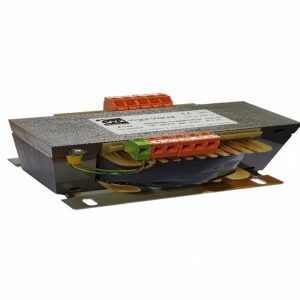
An instrument transformer is a type of electrical transformer used in power systems to measure high voltages or currents safely and accurately. They do this by scaling down these large values to levels that can be handled by standard measuring instruments like ammeters, voltmeters, and wattmeters, and also by providing electrical isolation. Think of them as the “eyes” and “ears” of your power system for measurement purposes.
Main Types of Instrument Transformers
- Current Transformers (CTs)
Purpose
To measure high alternating currents.
How they work?
The primary winding of a CT has very few turns (often just one, which can be the conductor carrying the high current itself) and is connected in series with the line carrying the current to be measured. The secondary winding has many more turns and is connected to the ammeter. The current in the secondary winding is a scaled-down, proportional representation of the current in the primary.
In summary, instrument transformers are essential devices for:
- Measurement
Getting accurate readings of voltage and current. - Isolation
Keeping high-voltage/current circuits separate from low-voltage measurement circuits. - Protection
Enabling fault detection and system protection.
If you have any specific questions about CTs, VTs, their specifications, or applications, feel free to ask!



Reviews
There are no reviews yet.