
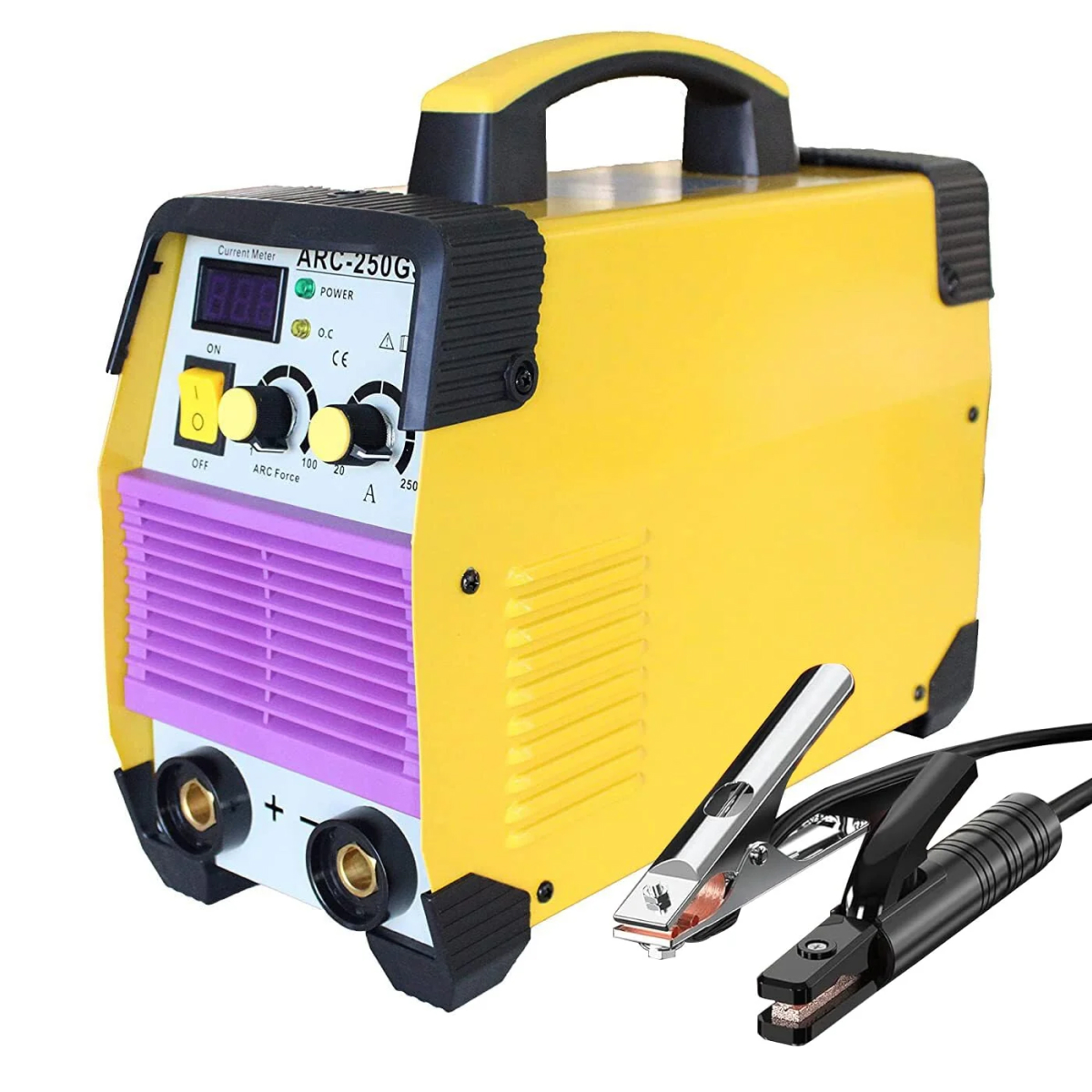
Description
Welding machines are essential tools for joining metal parts, and they come in various types, each suited for different applications and materials. Here’s a breakdown of the basic types of welding machines:
- Stick Welding (SMAW – Shielded Metal Arc Welding)
- How it works? Uses a consumable electrode coated in flux. The arc generated between the electrode and the workpiece melts both the electrode and the base metal, creating the weld pool.
- MIG Welding (GMAW – Gas Metal Arc Welding)
- How it works?
Uses a continuous wire electrode fed through a welding gun. An inert or semi-inert gas is fed through the gun to shield the weld pool from contamination. The arc melts the wire electrode and the base metal.
- How it works?
- TIG Welding (GTAW – Gas Tungsten Arc Welding)
- How it works
Uses a non-consumable tungsten electrode to create the arc. A separate filler rod is often used to add material to the weld pool. An inert shielding gas (usually argon) protects the weld area.
- How it works
- Flux-Cored Arc Welding (FCAW)
- How it works?
Similar to MIG welding, it uses a continuous wire electrode. However, the wire has a flux core that provides shielding gas and slag-forming elements when melted. Some FCAW wires require an external shielding gas, while others are self-shielded.
- How it works?
- Plasma Arc Welding (PAW)
- How it works?
Similar to TIG welding but uses a constricted arc that creates a highly concentrated plasma stream. This results in intense heat and a very narrow weld bead.
- How it works?



Reviews
There are no reviews yet.