
Description
1. Material Handling Equipment (often used in conjunction with lifting):
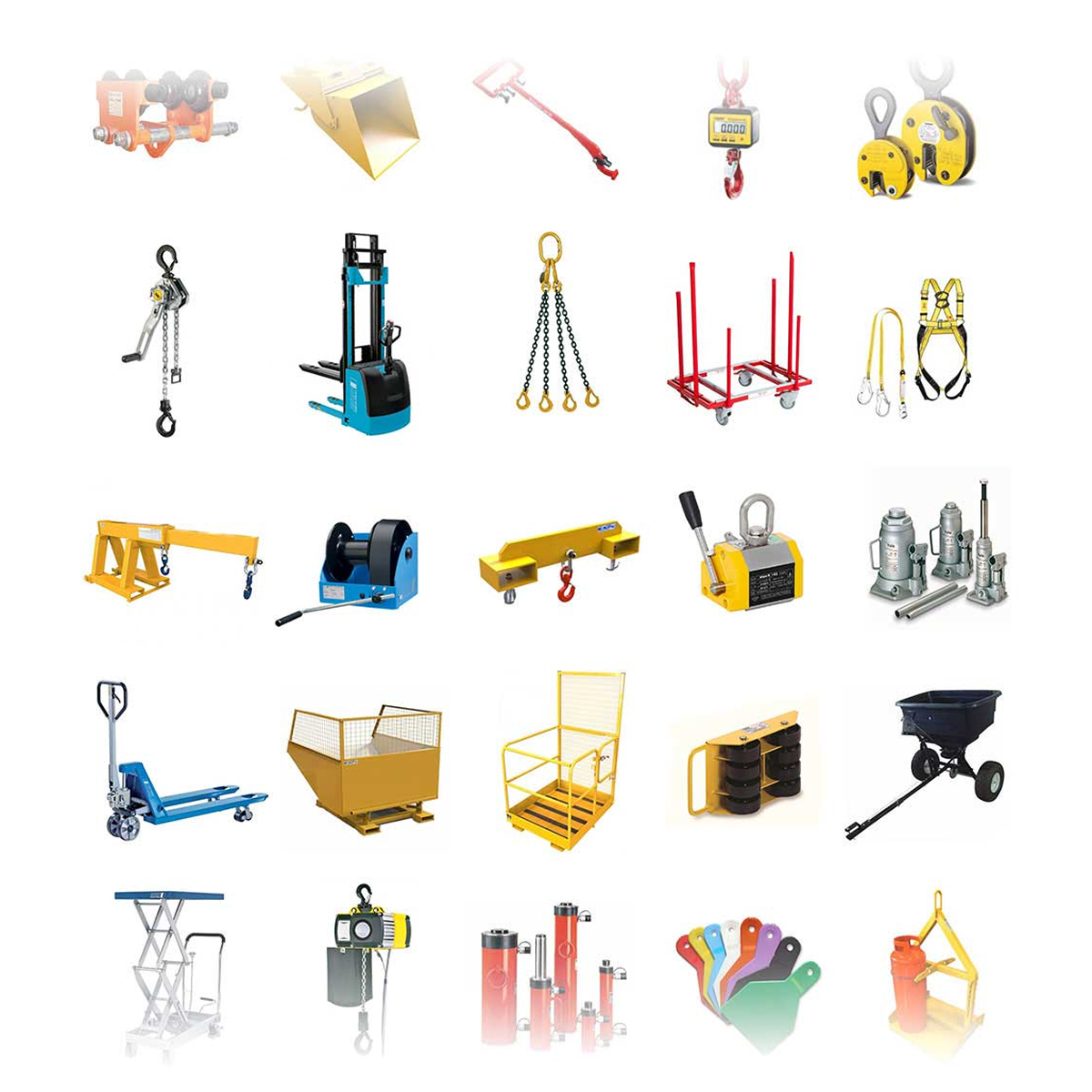
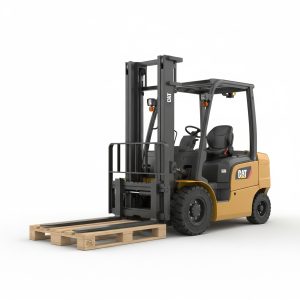
- Pallet Jacks (Hand Pallet Trucks)
Simple, manual devices for lifting and moving pallets over short distances. They don’t elevate significantly but provide a mechanical advantage for rolling. - Stackers
Similar to pallet jacks but with a mast that allows for some vertical lifting, enabling stacking of pallets or goods. They can be manual or electric. - Conveyors
While not directly “lifting” in the traditional sense, they move materials horizontally or at an incline, often over significant distances. This includes belt conveyors, roller conveyors, and screw conveyors. - Automated Guided Vehicles (AGVs) and Autonomous Mobile Robots (AMRs)
These intelligent vehicles can transport materials, and many are equipped with lifting mechanisms like forks or platforms.
2. Specialized Lifting Devices:
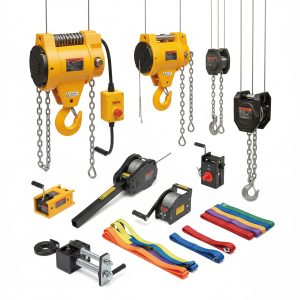
- Hoists
These are devices that use a drum or lift-wheel around which rope or chain wraps. They are used to lift and lower loads. - Manual Chain Hoists
Operated by pulling a hand chain. - Electric Hoists
Powered by electricity, offering greater lifting capacity and speed. - Pneumatic Hoists
Powered by compressed air, often used in environments where sparks are a concern. - Winch
A mechanism that winds a rope or cable around a spool, used for pulling or lifting. While often associated with horizontal pulling, they can be rigged for vertical lifting. - Lifts (for people or materials)
- Scissor Lifts
Portable platforms that are raised by a system of linked, folding supports in a criss-cross “X” pattern. Excellent for reaching elevated work areas. - Boom Lifts (Articulating and Telescopic)
These have a platform attached to a hydraulic arm (boom) that can be extended and articulated to reach high or difficult-to-access areas. - Personnel Lifts (Man Lifts)
Designed specifically for safely lifting workers to elevated positions. - Material Lifts (Vertical Reciprocating Conveyors – VRCs)
Used to move materials between different levels in a building, similar to a freight elevator but often more specialized. - Vacuum Lifters
Use suction cups to grip and lift smooth, non-porous surfaces. Ideal for glass, metal sheets, stone, and other materials. - Magnetic Lifters (Electromagnets and Permanent Magnets)
Use magnetic force to lift ferrous (iron-containing) materials. - Manipulators
Articulated arms that assist operators in lifting and positioning heavy loads with minimal effort. They often use pneumatic or electric power and can be mounted on overhead rails or mobile bases. - Balancers
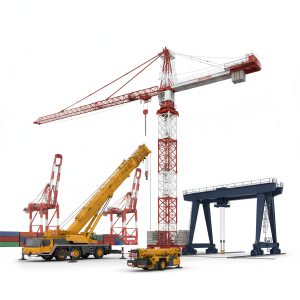
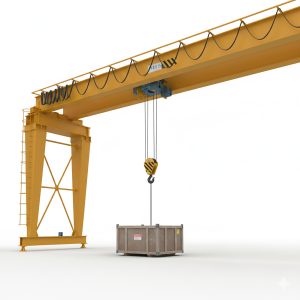
Devices that counteract the weight of a load, making it feel nearly weightless to the operator. They are used for repetitive tasks where precise positioning is required. - Gantry Cranes (Portable and Semi-Gantry)
Smaller, often portable versions of overhead cranes, typically used in workshops or for specific tasks where a full overhead crane isn’t feasible. - Jib Cranes
A type of crane with a horizontal beam (jib) supported by a vertical mast, used for lifting and moving loads within a specific radius.
3. Lifting Accessories and Attachments:
These are not standalone lifting equipment but are crucial for safely and effectively using other lifting devices.
- Slings
Chains, ropes, or webbing used to attach a load to a lifting device. - Chain Slings
Durable and strong, suitable for heavy loads. - Wire Rope Slings
Flexible and good for awkward loads.


Reviews
There are no reviews yet.