
Description
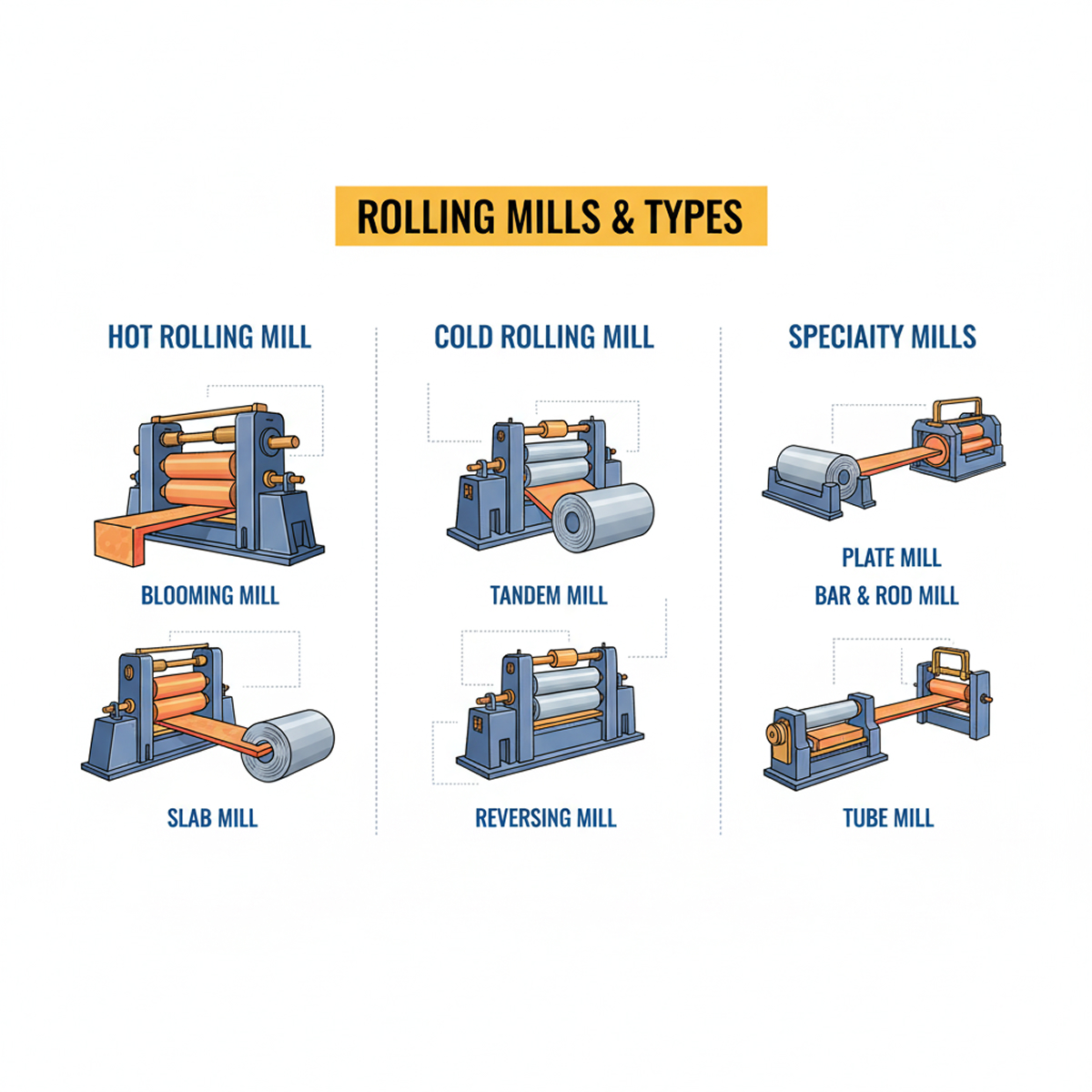
Rolling Mills & Types
“Rolling Mills & Types” is a concise and relevant topic that encompasses a significant area within the metalworking and manufacturing industries.
To provide a comprehensive overview, we can break it down into several key aspects:
I. What is a Rolling Mill?
A rolling mill is a machine used to reduce the thickness of metal, or to make metal stock have uniform thickness,
by passing it between two or more rollers. The process is typically carried out using a large, heavy-duty machine
that applies significant pressure to the metal.
II. The Rolling Process: How it Works?
-
Metal Preparation
The raw material (often called “ingot,” “billet,” or “slab”) is prepared.
This might involve heating it to a specific temperature (for hot rolling) or ensuring it’s clean and at room temperature (for cold rolling). -
Feeding
The metal is fed into the gap between the rotating rollers. -
Deformation
As the metal passes through the rollers, the gap between them is smaller than the thickness of the metal.
This difference in size forces the metal to deform, becoming thinner and often longer. -
Controlling Parameters
The speed of the rollers, the gap between them, and the pressure applied are all carefully controlled to achieve the desired dimensions and properties of the final product. -
Cooling/Finishing
After rolling, the metal may be cooled, further processed (e.g., straightened, cut, or treated), and inspected.
In summary, rolling mills are essential machinery that shapes metal into a vast array of products.
Understanding the different types of rolling mills and their applications is crucial for anyone involved in metal production and manufacturing.


Reviews
There are no reviews yet.