
Description
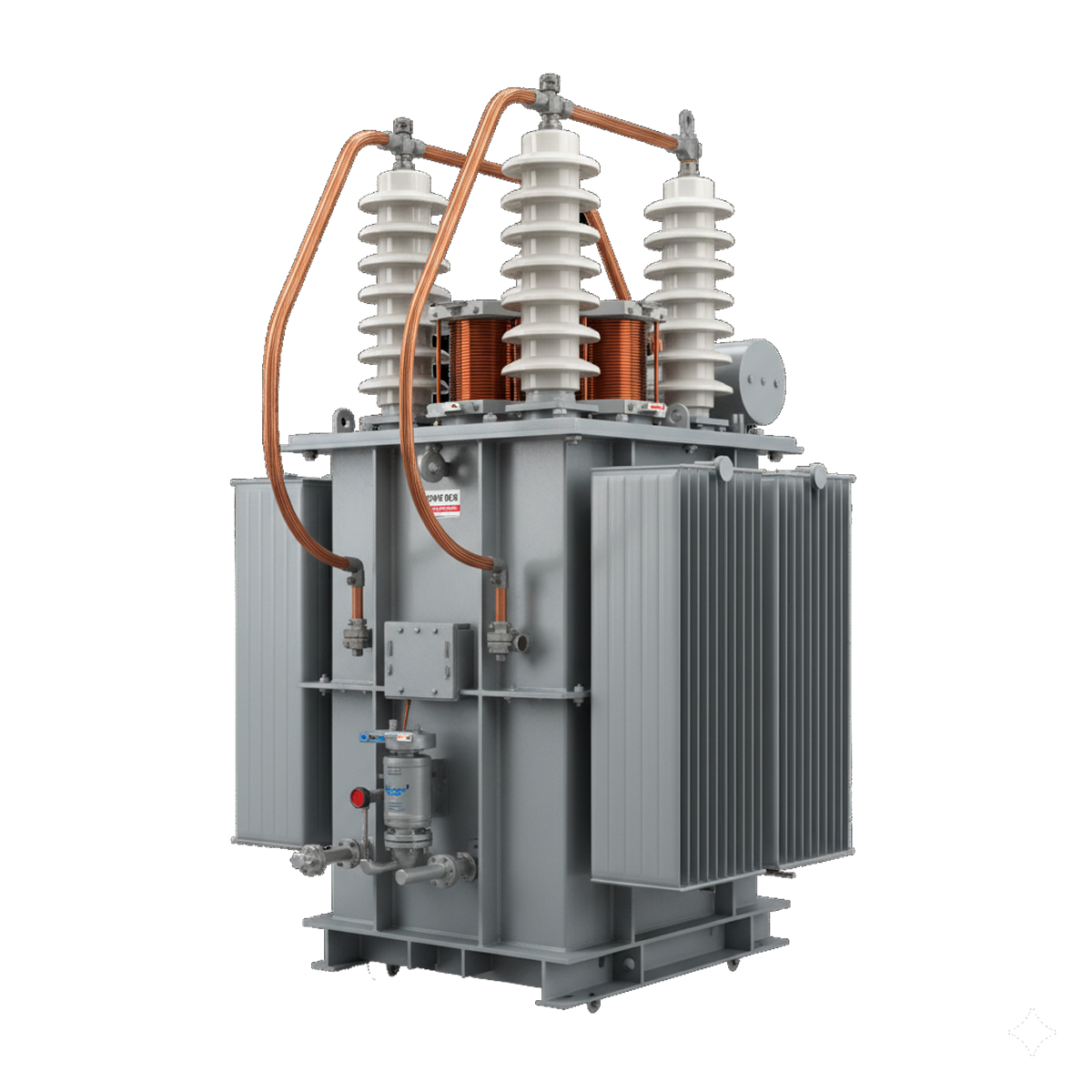
A power transformer is a static electrical device that transfers electrical energy between two or more circuits through electromagnetic induction. Its primary function is to change the voltage of an alternating current (AC) power supply. Here’s a breakdown of what that means and its key aspects:
How it Works (Electromagnetic Induction)
- Core
Power transformers typically have a laminated iron core. This core is designed to efficiently conduct magnetic flux. - Windings (Coils)
Two or more coils of insulated wire are wound around the core. - Primary Winding
This coil is connected to the input AC voltage source. - Secondary Winding
This coil is connected to the load where the transformed voltage will be used. - Alternating Current
When AC current flows through the primary winding, it creates a continuously changing magnetic field in the core. - Induction
This changing magnetic field then induces a voltage in the secondary winding.
Key Functions and Principles
- Voltage Transformation
This is the most fundamental function. Transformers can either: - Step-up
Increase the voltage (secondary voltage is higher than primary voltage). This is crucial for long-distance power transmission as it reduces current and thus resistive losses. - Step-down
In summary, a power transformer is a vital device that enables the efficient and safe transfer of electrical energy by conveniently changing voltage levels. Without them, our modern electrical infrastructure would simply not be possible.



Reviews
There are no reviews yet.