
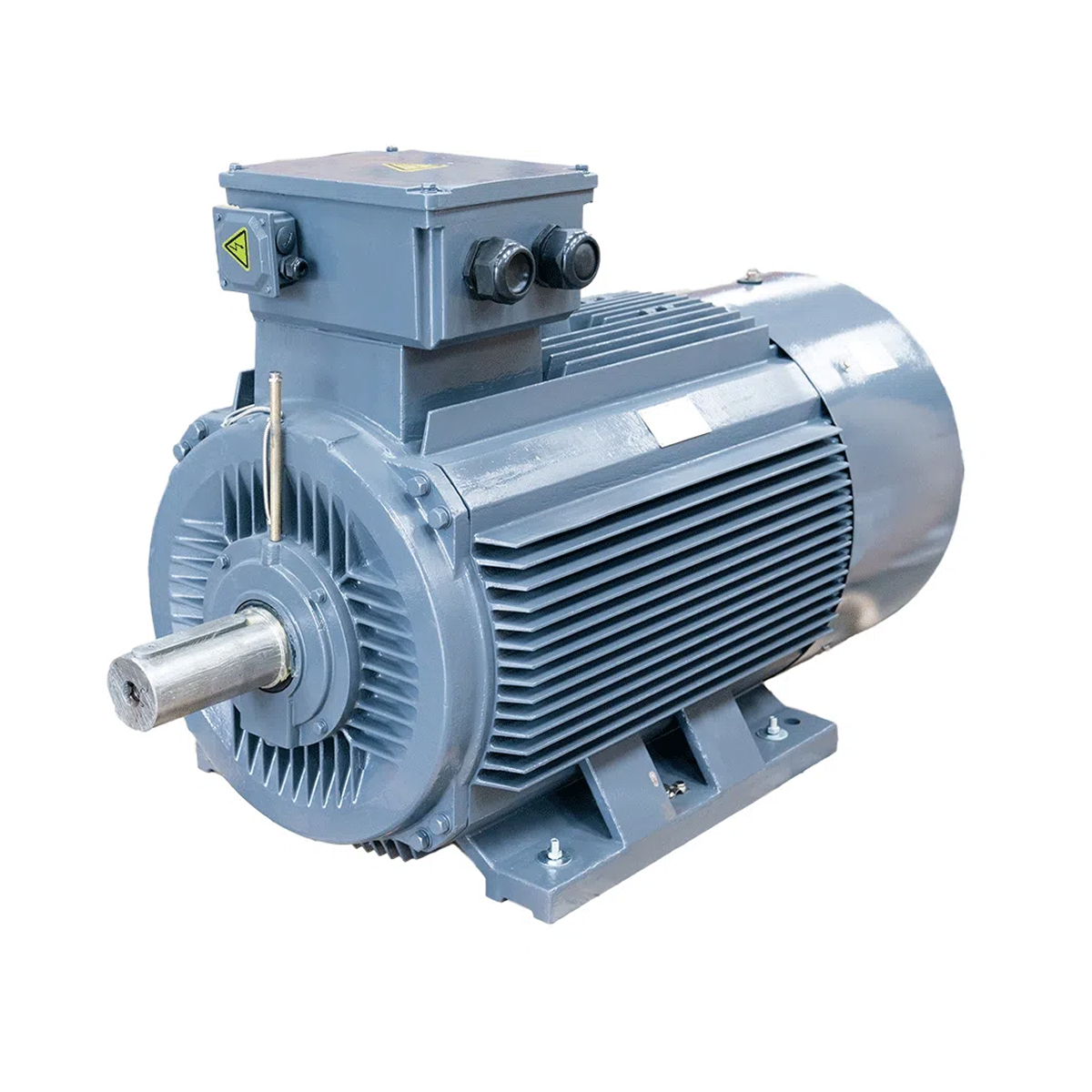
Description
Fundamental Types of AC Motors:
-
Synchronous Motors
In a synchronous motor, the rotor rotates at the exact same speed as the rotating magnetic field produced by the stator. This speed is called the synchronous speed and is determined by the frequency of the AC power supply and the number of poles in the motor.-
Rotor Construction
The rotor is essentially an electromagnet (either a permanent magnet or an electromagnet powered by DC current). This rotor’s magnetic field “locks” onto the rotating magnetic field of the stator, causing it to spin in sync.
-
Rotor Construction
-
Induction Motors (Asynchronous Motors)
-
Principle
In an induction motor, the rotor rotates at a speed slightly slower than the rotating magnetic field of the stator. This difference in speed is called “slip,” and it’s essential for the motor to produce torque. The rotating magnetic field induces a current in the rotor conductors, which in turn creates its own magnetic field that interacts with the stator field. -
Rotor Construction
The most common type is the squirrel cage rotor, which consists of a cylindrical assembly of conductive bars short-circuited at both ends by end rings. Another type is the wound rotor, which has windings similar to the stator, connected to slip rings.
-
Principle
Understanding these basic types helps in selecting the right AC motor for specific industrial or commercial applications, considering factors like speed, torque, efficiency, and control requirements.


Reviews
There are no reviews yet.