

Description
Brushless motors are incredibly versatile and come in several “basic types” based on their design and how they operate. The most common and fundamental classifications are:
- Based on Rotor Type
- Permanent Magnet Synchronous Motors (PMSM)
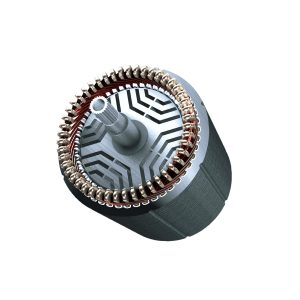
These motors have permanent magnets attached to the rotor. The stator windings are energized in a specific sequence, creating a rotating magnetic field that “locks onto” and drags the rotor’s magnetic field along. - Interior Permanent Magnet (IPM)
Magnets are embedded within the rotor core. Offers better protection for magnets, reduced torque ripple, and can achieve higher speeds. Often more complex to manufacture. - Induction Motors (AC Asynchronous Motors with Brushless Control)
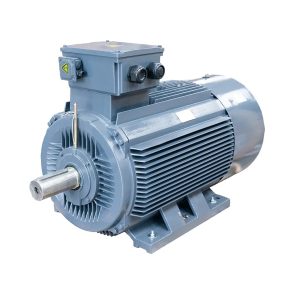
While traditionally known as brushed motors, AC induction motors can be operated as brushless motors when paired with sophisticated electronic controllers (Variable Frequency Drives – VFDs). In this context, the rotor is typically a “squirrel cage” design with conductive bars. The rotating magnetic field from the stator induces currents in the rotor, which then create their own magnetic field. This induced field lags behind the stator field, causing the rotor to rotate asynchronously. - Reluctance Motors
These motors have a rotor made of a material that can be easily magnetized (e.g., steel) but has no magnets or windings. The rotor is shaped with “salient poles” (protrusions). The stator windings create a rotating magnetic field that attracts the rotor’s poles to align with it, causing rotation. The rotor tries to minimize its reluctance (magnetic resistance) in the magnetic path.
- Permanent Magnet Synchronous Motors (PMSM)
The choice of motor type depends heavily on the application’s requirements for efficiency, cost, power density, torque characteristics, and environmental robustness.

Reviews
There are no reviews yet.