
Description
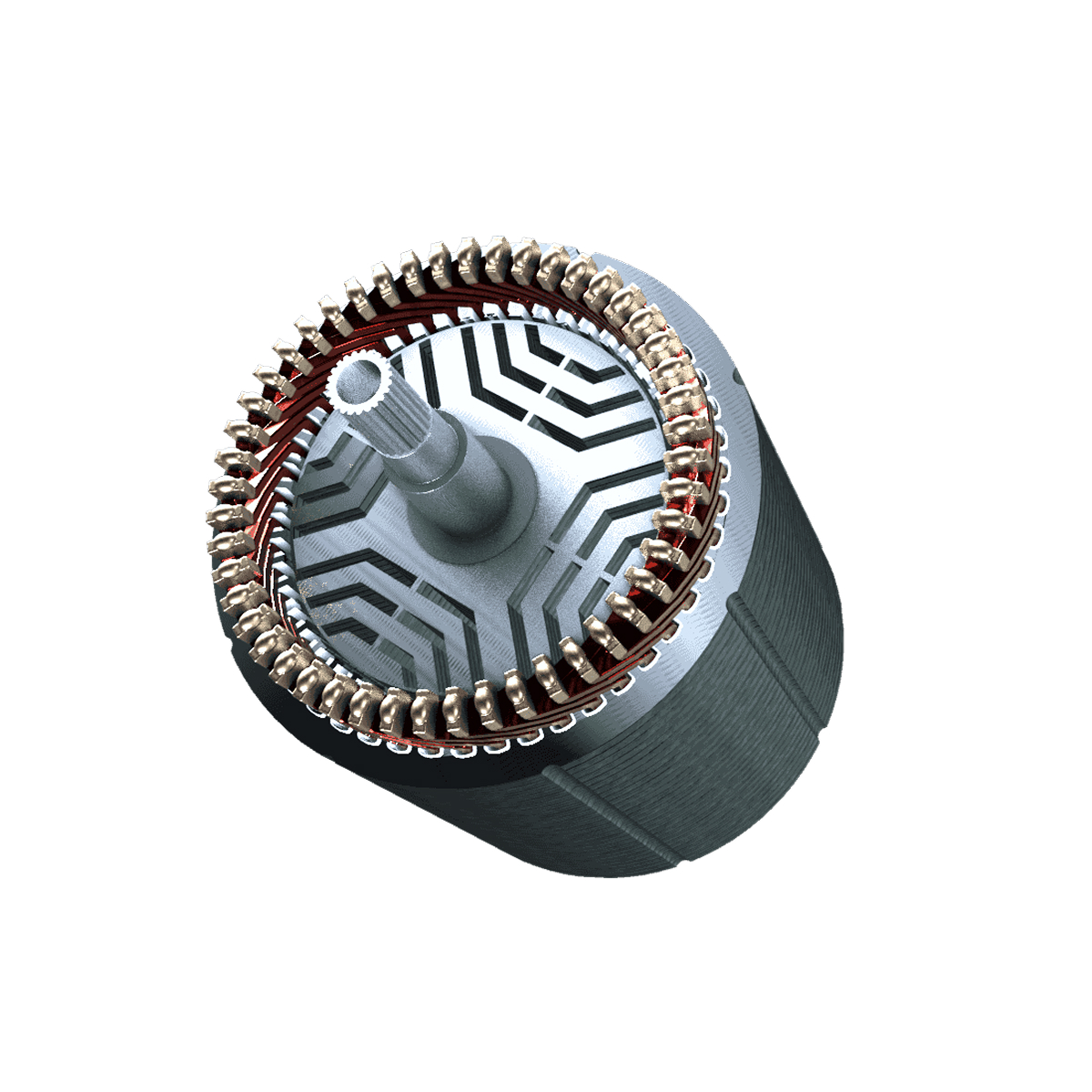
Reluctance motors are a fascinating class of electric motors that operate based on the principle of magnetic reluctance. This means they utilize the tendency of a magnetic flux to follow the path of least magnetic resistance (lowest reluctance). Unlike conventional motors that rely on rotating magnetic fields created by permanent magnets or DC excitation, reluctance motors create torque by aligning their rotor with the stator’s magnetic field, seeking the path of lowest reluctance. There are two primary basic types of reluctance motors:
-
Switched Reluctance Motor (SRM)
The Switched Reluctance Motor (SRM) is the most common and widely studied type. Its operation is based on sequentially energizing distinct stator windings, which then attract the nearest salient poles of the rotor. -
Synchronous Reluctance Motor (SynRM)
Synchronous Reluctance Motors (SynRMs) operate at synchronous speed, meaning the rotor rotates at the same speed as the rotating magnetic field produced by the stator. They achieve this by designing the rotor to have regions of high and low magnetic reluctance.
The choice between the two often depends on the specific requirements of the application regarding torque ripple, speed control, efficiency targets, and control system complexity.


Reviews
There are no reviews yet.