
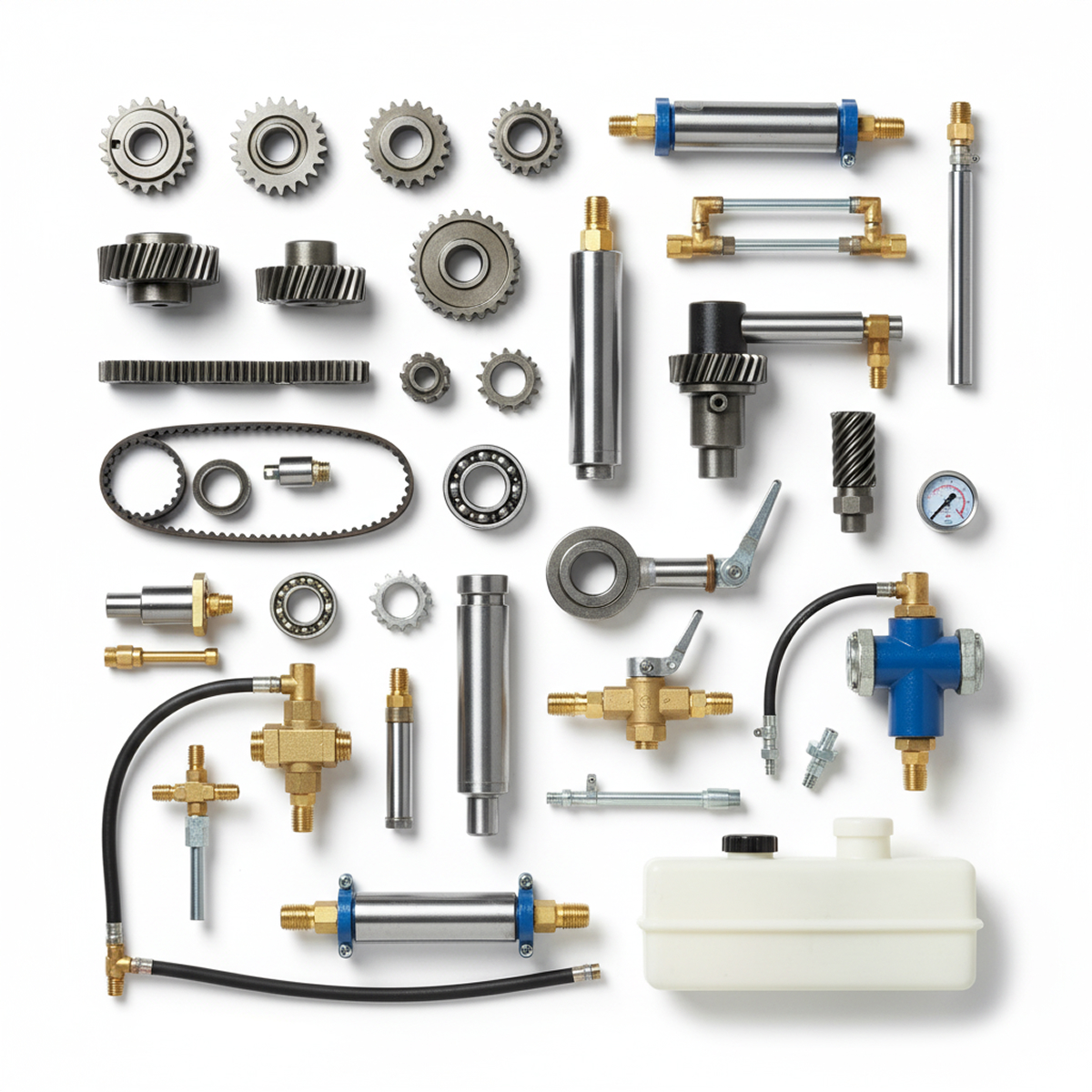
Description
Mechanical & Fluid Power is a broad and interconnected field that encompasses two fundamental areas of engineering and technology:
1. Mechanical Power
This refers to the generation, transmission, and application of mechanical energy. It involves:
- Forces and Motion
Understanding how forces cause objects to move, change direction, or deform. - Mechanisms
Designing and analyzing systems of interconnected parts (like gears, levers, linkages) that transmit or modify motion and force. - Energy Conversion
Converting one form of energy (e.g., chemical in fuel, electrical) into mechanical energy (e.g., rotation, linear motion). - Machines
The devices and systems that utilize mechanical principles to perform work. This includes:- Engines
Internal combustion engines, steam engines, electric motors that generate mechanical power.
- Engines
2. Fluid Power
This refers to the generation, control, and transmission of power using pressurized fluids (liquids or gases). It leverages the properties of fluids to create controlled motion and force. This involves:
- Hydraulics
Using liquids (typically oil) as the working fluid. Hydraulics is known for its high force capabilities and precise control. Key components include - Pumps: Generate flow and pressure.



Reviews
There are no reviews yet.